top of page

News & Articles

Fréttir & Greinar

Search

Building Belonging: ERGI’s Mission to Strengthen Queer Community in North Iceland

Despite its presence, the queer community in North Iceland often goes unseen—dispersed across towns, fjords, and rural areas where visibility can feel like a risk. ERGI, a newly founded organization for queer students and young people in the region, aims to change that. “Many LGBTQ+ individuals outside of urban centers feel isolated or disconnected,” says Aðalbjörn Jóhannsson, chair of the group. “There’s no denying that access to support networks is more limited in the countryside compared to the capital region.”

Together with communications lead Snævar Óðinn Pálsson, Aðalbjörn is working to create something they both felt was missing: a safe, visible, and affirming space where queer people can gather, learn, and thrive.

Aðalbjörn at Reykjavík Pride in 2023, parading as part of a local LGBTQ+ group from North Iceland

A Community Rooted in Solidarity

“We know the desire is here,” says Aðalbjörn. “There’s a hunger for connection—for places that celebrate diversity and encourage people to show up as they are. That’s what ERGI is trying to nurture.”

He emphasizes that inclusive communities don’t just happen on their own. “They take intention and effort. People need to feel safe enough to take that first step—to reach out and find each other.”

When Visibility Disappears After the Flags Come Down

Events like the North Iceland Pride Festival have helped boost queer visibility in the region. But, as Aðalbjörn notes, they’re often fleeting. “It’s amazing to see rainbow flags flying on every street corner during the festival week. But the moment they come down, there’s a kind of silence again. That’s why we need spaces that last—ongoing spaces for connection and care.”

ERGI’s events—like movie nights and discussion meetups—are meant to be low-barrier entry points into community life. But the group has much bigger plans.

Envisioning a Queer Center for the North

“One of our long-term dreams is to establish a dedicated queer center in North Iceland,” says Aðalbjörn. “A place with shared resources, space for events and workshops, peer support, and access to counseling or advice. It would help improve the quality of life for LGBTQ+ people in the region, while also raising visibility and normalizing our presence.”

He also stresses the importance of representation in public discourse. “We want to be part of shaping the conversations happening in society—from a place of lived experience, knowledge, and dignity.”

Safety Is More Than a Feeling—It’s a Need

Amid growing backlash against queer rights globally, the need for such spaces has become more urgent. “People aren’t just worried about being accepted socially anymore. They’re worried about their physical safety,” says Aðalbjörn. “And even though I’m queer myself, I recognize my position of privilege as a cis gay man. When I talk to trans people—especially those going through gender transition—I see just how afraid many of them are becoming.”

He adds: “We should not be seeing people shrink themselves or retreat into hiding. But that’s happening, and that’s exactly why ERGI must exist.”

The Shift in Coming Out—and Why It’s Reversing

Both Aðalbjörn and Snævar are concerned about a trend they’ve noticed: children and teens are coming out later than they used to.

“For a while, we were seeing real progress,” Aðalbjörn explains. “Young people were coming out earlier—high school, middle school, even elementary school. But now, that age seems to be creeping up again, especially for boys. Some kids come out and then walk it back when they realize the reality they’re facing.”

The Surprising Sources of Resistance

Interestingly, it’s not always the older generation that resists change. “Grandparents have often been more accepting than expected,” Aðalbjörn notes with a laugh. “When I came out, I was sure my grandfather would struggle with it—he’s 50 years older than me and spent most of his life at sea. But he had no problem with it. Turns out, he already knew plenty of queer folks—and his own sister was a lesbian who moved to Denmark. I just didn’t know.”

Snævar adds that some of the resistance today seems to come from other directions. “Parents, not grandparents, are sometimes the biggest barrier now. And I think part of that has to do with how loud and visible certain voices of intolerance have become.”

They point to cultural figures like J.K. Rowling as examples of how high-profile rhetoric can reinforce harmful beliefs. “When public figures speak out against trans people, it has ripple effects,” says Snævar. “It emboldens others.”

Blame, Misinformation, and the Power of ‘Othering’

Studying sociology at the University of Akureyri, Aðalbjörn connects these issues to a wider concept: “What we call ‘othering’—framing someone as fundamentally different or separate—erodes empathy. And that’s what we’re seeing more of. Marginalized groups are being pushed further to the margins. They’re blamed for everything from literacy rates to social unrest.”

He mentions how some people have even blamed LGBTQ+ organizations for declining reading performance among boys. “That’s completely baseless,” he says, “but these narratives take hold, especially online. Comment sections are full of misinformation parading as truth.”

When Fear Crosses Borders
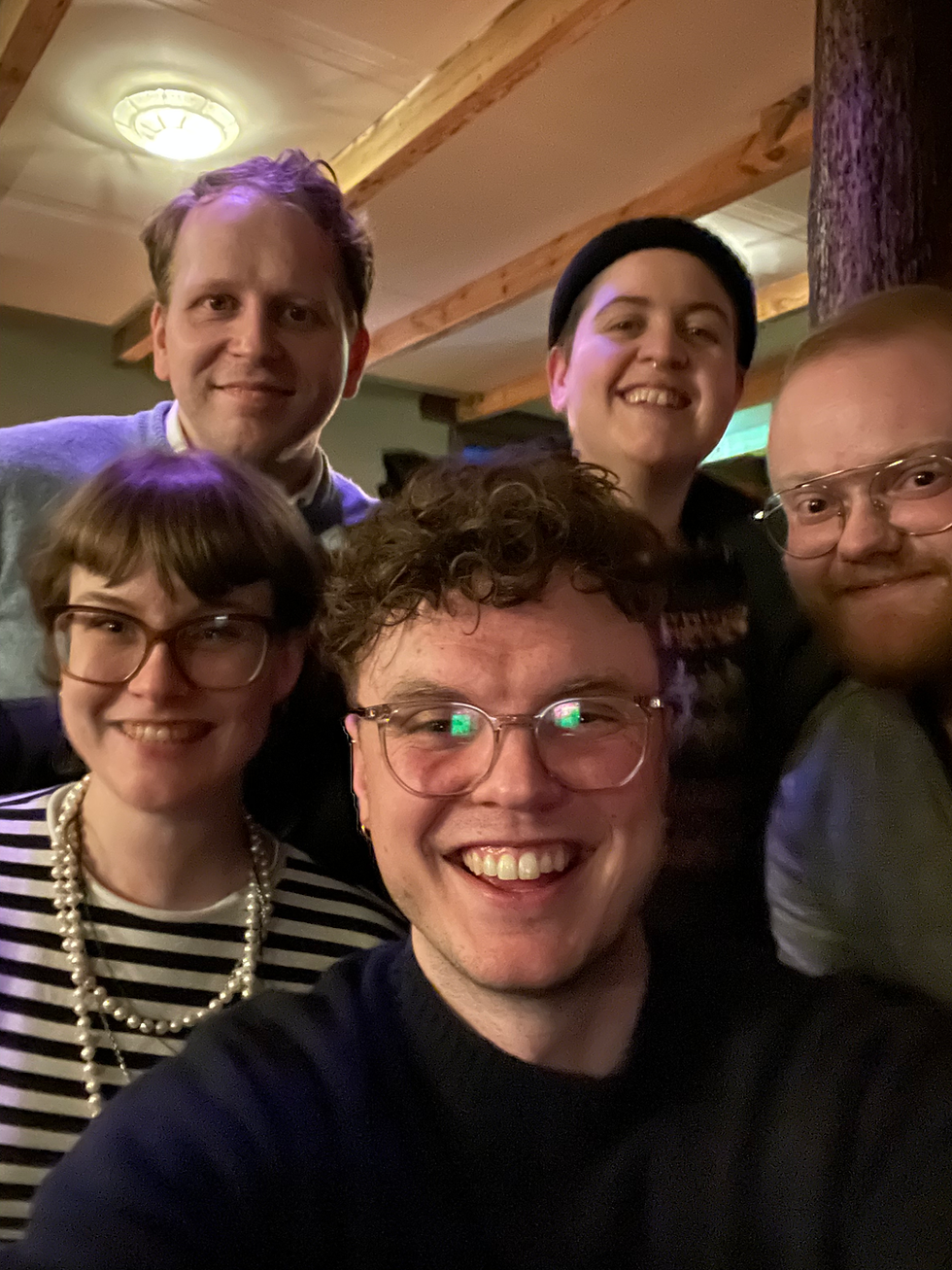
A group of queer friends who all grew up in North Iceland

Young queer people in Iceland are also absorbing fears from beyond the country’s borders, says Aðalbjörn. “Social media connects kids to stories from around the world. I’ve had conversations with teenagers here who are terrified to come out because they think they’ll be thrown out of their homes. That’s a very real fear for queer kids in the U.S., for example—but it’s much rarer here. Still, the fear is real for them, and we have to respond with care and honesty.”

Why Spaces Like ERGI Matter Now More Than Ever

“In times like this,” says Snævar, “it’s essential that people have places where they can talk openly, feel understood, and know they’re not alone. That’s what ERGI aims to offer—a community that listens, affirms, and stands together.”


ERGI: A New Inclusive Space for Queer Students in North Iceland

ree

A new queer student organization, ERGI, has launched in North Iceland with a bold and inclusive mission. Though the group was founded by and for LGBTQ+ students, its doors are open to everyone, regardless of study status or background. “You don’t have to be enrolled in school to participate in our events or join the board,” says Aðalbjörn Jóhannsson, the organization's chair (or stýri, a gender-neutral Icelandic term for leader).


Responding to a Clear Need

The idea for ERGI grew out of a recognized need: queer youth and students living in rural Iceland often lack access to the support networks and social events that are more readily available in the capital region. “We wanted to focus on young people and students outside the Reykjavík area,” says Aðalbjörn. “There’s a real shortage of spaces that reflect their reality—spaces for connection, education, and mutual support.”

Snævar Óðinn Pálsson, ERGI’s communications officer, agrees. “Although we call ourselves a student group, our mission is broader: to build visibility, provide education, encourage research, and foster community. Our members live and work all over the country, not just in university settings.”

Rooted in Akureyri, Reaching Farther

While ERGI is based in Akureyri, the group is working to build a network that extends across the North. One of its key collaborators is the University of Akureyri (HA), which has strong programs in gender studies and an active equality committee.

“We’ve had great support from the university,” says Aðalbjörn, a social sciences student at HA. “They’ve welcomed us, given us space to meet, and we see huge potential for future collaboration. We even dream about Akureyri becoming a hub for queer studies in Iceland someday.”

More Than Just for Students

Unlike some student groups, ERGI aims to serve a wide age range. “Other local organizations, like Hinsegin Norðurland, do amazing work for children and teenagers,” Aðalbjörn notes. “But we saw a gap when it came to young adults and older queer folks. We want to be there for them too.”

With years of experience in education, Aðalbjörn emphasizes the importance of queer education in schools. “If you work in a school, you’re working with queer kids—even if you don’t realize it,” he says. “Most people mean well, but they often doubt themselves and worry about getting it wrong. That uncertainty holds people back. We’re here to help build that confidence, with a professional and experienced approach.”

Expanding into Healthcare and Beyond

Snævar hopes the group’s educational efforts can reach even further. “One of my dreams is to bring queer education into the healthcare system,” he says. “Many people I know went through nursing or occupational therapy programs without ever encountering queer topics in their studies.”

Aðalbjörn adds that in smaller communities, queer people often share names of LGBTQ+-friendly healthcare professionals—or warn each other about bad experiences. “That shouldn’t be necessary,” he says. “We need to make sure inclusive education reaches every professional sector.”

Community, Events, and Growth

ERGI’s activities are already underway, with game nights and movie evenings drawing participants from various backgrounds. “We don’t pretend to speak for all queer people in the North,” says Aðalbjörn. “It’s a diverse community with different needs. But we want to offer consistent opportunities to meet, learn, and have fun together.”

The group also emphasizes accessibility: membership is not required to attend events. “People can just show up,” says Snævar. “But if they do want to join officially, they can email us at ergi@ergi.is and get more involved.”

ree

Looking Ahead: Education, Outreach, and Inclusion

As the organization grows, so does its ambition. ERGI plans to offer educational talks and workshops for schools, workplaces, and healthcare providers. “We’re especially focused on being mobile,” says Aðalbjörn. “We want to bring our work to communities beyond Akureyri.”

They also plan to participate in orientation events for new students at HA and make a point of welcoming international students and residents. “Many of our events are in English,” Snævar notes. “We’re very open to people with diverse backgrounds.”


ree

Eftirfarandi grein birtist á forsíðu HA: Ergi og Hinsegin hátíð á Norðurlandi

„Ég er og verð alltaf Öxfirðingur,“ segir Aðalbjörn Jóhannsson með bros á vör. Hann er stýri Ergi, félags hinsegin stúdenta á Norðurlandi og lýsir sér sem sveitamanni, bókaormi, sérlegum áhugamanni um fólk og fylgist með kosningasjónvarpi af sömu innlifun og önnur fylgjast með Eurovision. Með rætur í Norður- og Suður-Þingeyjarsýslu, tengingu við Akureyri frá unglingsárum og smá Norðmann í blóðinu, hefur Aðalbjörn komið sér fyrir í BA námi í félagsvísindum við Háskólann á Akureyri. Hann viðurkennir að leiðin hafi upphaflega legið í kennaranám, en í dag blómstrar áhugi hans á fólki og samfélagsmálum í háskólanum þar sem samheldni og stuðningur skína í gegn.

Ergi – rótgróið í nýrri bylgju

Ergi var stofnað á árinu til að svara skýrri þörf: Skorti á vettvangi fyrir hinsegin stúdenta á Norðurlandi. Aðalbjörn lýsir því hvernig félagið varð til með ákveðinni jarðýtuaðferð og „þetta reddast“ hugarfari.


„Eins varð okkur mjög fljótt ljóst að það er stór hópur fjarnema sem býr á Norðurlandi en tilheyrir skólum úti um allan heim. Við viljum því leggja áherslu á að þrátt fyrir að þungamiðja Ergis sé á Akureyri og í kringum HA þá er félagið og starfsemi þess opin öllum sem hafa áhuga, óháð skóla eða skólavist, enda félag hinsegin stúdenta á Norðurlandinu öllu,“ segir Aðalbjörn eina af tveimur ástæðum þess að þörf var á að stofna Ergi. Hin ástæðan er sú að þrátt fyrir mikinn velvilja frá háskólanum, sveitarfélögum og þeim samfélögum sem hinsegin fólk tilheyrir þá eru ýmsir þröskuldar, hræðsla og vaxandi undiralda mótlætis sem þarf að takast á við og svara.

„Við viljum skapa öruggt og opið umhverfi þar sem fólk getur upplifað að það tilheyri. Þegar fólk finnur að það tilheyrir eykur það vellíðan og skapar opnara og heilbrigðara háskólasamfélag,“ segir Aðalbjörn og bætir við: „Ergi er í grunninn félag hinsegin stúdenta á Norðurlandi en það standa engin í hliðinu og mæla hinseginleika, öll eru mjög velkomin að starfinu og það á jafnt við um stúdenta, starfsfólk eða aðra aðila sem hafa áhuga á því sem við erum að gera.“

Með stofnun Ergis varð því loksins til langþráður vettvangur fyrir hinsegin stúdenta, annað ungt fólk og tengda aðila til að deila eigin hinseginleika, reynslu og upplifunum með jafningjum sínum; hagsmunafélag sem berst fyrir sjónarmiðum hinsegin fólks í stefnumótun háskóla, hagsmunasamtaka stúdenta og opinberra aðila; samfélag sem leggur áherslu á hinsegin menningu og valdeflandi fræðslu fyrir stúdenta, kennara og almenning; og stuðningsnet sem horfir til þess að hlúa að líðan, sjálfsmynd og andlegri heilsu meðlima sinna.

Að upplifa háskóladrauminn

Aðalbjörn lýsir námssamfélaginu í HA við það sem hann hafði séð í amerísku bíómyndunum, allavega því góða, þar sem samkennd og nálægð milli stúdenta og kennara er hluti af daglegu lífi. Uppáhaldsstaður hans í HA er Teppið – samkomustaður stúdenta í skólanum þar sem er lært, aðstoð veitt og gefin og stundum gripið í gamla góða slúðrið. „Staðtímar eru galdur,“ segir hann og hvetur öll, líka fjarnema, til að mæta í allavega einn tíma eða spjall við kennarann um hugðarefni námsins.

Aðalbjörn segir einn af kostunum við félagsvísindanámið í HA vera hvað það er góður undirbúningur fyrir rannsóknir: „Þó að ég hafi stundum blótað aðferðafræðikúrsunum þá er ég að vinna við framkvæmd rannsóknar hjá Þekkingarneti Þingeyinga í sumar og finn hvað áherslur skólans hafa verið góður og hagnýtur undirbúningur.“

Í samtalinu leggur Aðalbjörn áherslu á mikilvægi þess að tungumálið þróist áfram – að það taki mið af breyttum veruleika og víðari skilningi. Kynhlutlaust mál á að eiga sér sess, rétt eins og kynjað mál þegar það á við. „Við gerum íslenskri tungu engan greiða með því að takmarka möguleika hennar til að stækka í takt við nýjan veruleika.“

Með einlægni, djúpri samfélagsmeðvitund og hressilegri glettni stendur Aðalbjörn fyrir því sem Ergi og HA vilja byggja upp: Mennsku, fjölbreytni og rými fyrir öll.

Háskólinn í liði með fjölbreytileikanum

Aðalbjörn telur viðburði líkt og Hinsegin hátíðina afar mikilvægt innlegg: „Þetta eykur sýnileika, býr til vettvang þar sem lifandi kynni geta brotið niður fordóma og skapar vonandi þá tilfinningu að samfélagið ætli sér að styðja við hinsegin fólk og veruleika þess allt árið um kring.” Hann segir að Ergi sé ekki formlegur aðili að hátíðinni í ár, enda stofnun þess rétt að baki, en þrátt fyrir það munu félagar taka þátt og standa fyrir viðburðum.

Hinsegin hátíð á Norðurlandi fer fram 18.–22. júní og lýsir Aðalbjörn henni sem viðburði sem „færi hinseginleika heim“. Hátíðin er vettvangur til að sýna að fjölbreytileiki og hinseginleiki blómstri líka fyrir norðan. Hátíðin hefur ekki aðeins samfélagslegt gildi heldur einnig menningarlegt og efnahagslegt vægi. Finna má dagskrá hátíðarinnar og upplýsingar á vefsíðunni hinseginhatid.is.

Háskólinn á Akureyri tekur virkan þátt í hátíðinni og styður við Ergi og samfélagið með ýmsu móti: flaggar hinsegin fánanum, býður starfsfólki í regnbogakaffi og nýtir samfélagsmiðla skólans til að styðja við hinsegin samfélagið því Ergi mun vera með yfirtöku þeirra meðan á hátíðinni stendur. Þannig miðlar skólinn boðskap fjölbreytileikans og sýnir með áþreifanlegum hætti að öll eru velkomin innan veggja hans.

ree


bottom of page